

Community-Led Pond Conservation Helps Climate Change Adaptation in Nepal’s Parbat District


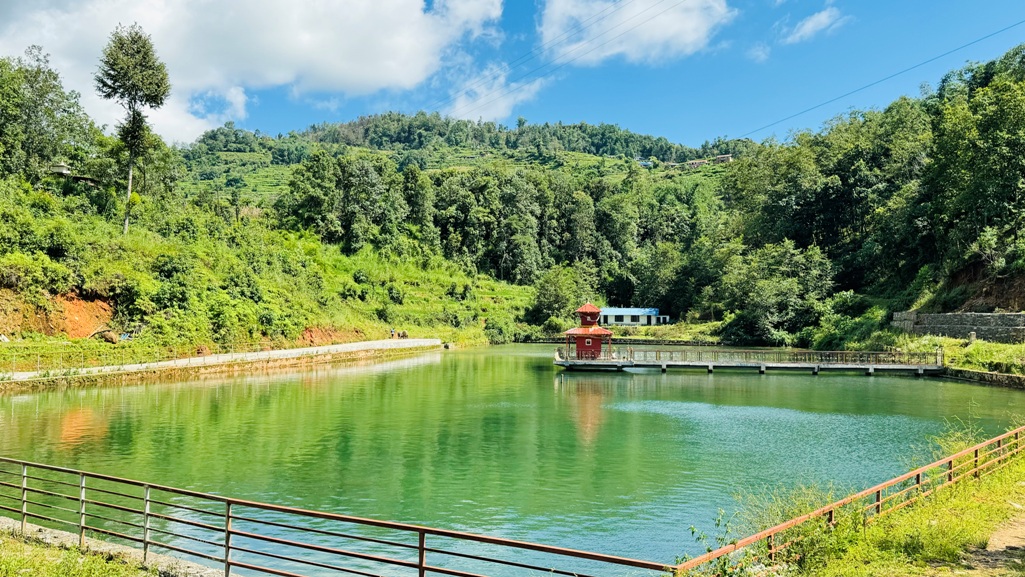

Ganesh Paudel/ Parbat, Nepal — In a remarkable example of local climate adaptation, residents of Ramja, Ward No. 7 of Modi Rural Municipality in Nepal’s Parbat District have successfully conserved a traditional pond spread over approximately three ropani of land (about 1,500 square meters) to address the growing impacts of climate change and water scarcity.
The initiative was launched after local communities observed that several natural springs originating from the ecologically important Panchase region were gradually drying up. Concerned about the declining availability of water and the increasing risk of drought, villagers came together to restore and protect the traditional pond situated at the foothills of the settlement.
विज्ञापन



According to Pond Conservation Committee Chairperson Gupta Bahadur Thakuri, the pond serves as a natural reservoir for collecting and storing rainwater during the monsoon season. The stored water helps recharge groundwater reserves, supports downstream watersheds, and contributes to the preservation of natural springs in lower areas.
“The springs feeding our communities had started disappearing due to changing rainfall patterns and environmental degradation. By conserving this pond, we are able to harvest rainwater, replenish groundwater, and maintain water availability throughout the year,” Thakuri said.
Local residents report that the conservation effort has already produced encouraging results. Springs located downstream, which previously dried up during the winter months, now continue to provide water even in the dry season. The improved groundwater recharge has helped ensure a more reliable water supply for households, livestock, and agricultural activities.
Experts have long emphasized the importance of traditional water bodies in climate adaptation strategies, particularly in Nepal’s middle hills, where communities are increasingly facing the effects of erratic rainfall, prolonged dry spells, and declining water sources. Small-scale water conservation structures such as ponds play a crucial role in capturing excess rainfall, reducing surface runoff, and enhancing groundwater recharge.
The Ramja pond demonstrates how indigenous knowledge and community-led action can complement broader climate resilience efforts. By reviving a traditional water management system, local people are not only safeguarding water resources but also strengthening the resilience of their ecosystem against the growing challenges posed by climate change.
As climate-related water stress becomes more common across Nepal’s mountainous regions, the success of the Ramja pond conservation initiative offers a practical and replicable model for other communities seeking sustainable solutions to protect their water resources and secure their future livelihoods.




चर्चामा
सम्बन्धित समाचार























फेसबुक प्रतिक्रियाहरु